Fiat Coupé
In Italy, no one grows up wanting to be a train driver.
Nobody buys an Italian car to get to Swindon.
The launch sold out in its first few months.
Machines can write.
They can’t notice.
The Copycourse is Gideon Todes, ex-Saatchi & Saatchi. We find the thing only your company could say, then rebuild the brand around it, top to bottom.
Machine text is well structured, with fewer mistakes than most human writers make. It summons the basic research in seconds. But, like the microwaveable fish pie you buy in the chiller section, it’s rarely great.
Ready meals can’t really have fresh herbs, because they go off. They can’t do crunch, because crunch goes soggy. The aromas come out muted, and after a while every meal tastes pretty much like every other meal.
That’s fine if you’re hungry. It’s a problem if you’re trying to be different, because your competitors are shopping in the same aisle.
The answer isn’t to ban the microwave. It’s to add the one ingredient the factory can’t get. A real conversation with a real customer. A detail so specific that nobody could have made it up, because nobody did.
Paste your text here and see how it scores.
Your domain authority rests on this.
This is a toy: a few dozen lines of JavaScript looking for a few dozen phrases, and nothing you type leaves your browser. The benchmarks come from our Slop Factor tracker, which is a proper audit, read properly. How we scored them.
AI means proprietary information will beat proprietary data.
Michael Burtov NSU Broward Center of Innovation
The sticky note on the monitor.
The spreadsheet nobody admits is mission‑critical.
The late‑night phone call.
The exception the software never anticipated.
What noticing actually finds
Companies don’t buy office coffee machines to save a trip to Starbucks.
They buy them because the foyer becomes the watercooler. When a bank call centre had whole teams take their coffee breaks together, call-handling time fell by
Alex Pentland, MIT. Harvard Business Review, 2012. The selling point was there all along. Someone just had to notice it.
What have you noticed that no one else has?
Gyms get left with all the lost property of their clients, yet with hundreds of brands of gym management software and their apps, there’s nowhere to post these items.
A brand is that random but significant piece of behaviour your customers remembered long after the marketing people have gone home.
Gideon began as a copywriter at Saatchi & Saatchi, then spent a career in some of the best agencies in London, taking big brands apart and putting them back together again.
He has launched an Italian coupé, explained satellites, sold wine with a joke in French and trained a great many people to think creatively.
He still does the interviews himself. It’s the bit he won’t hand to a machine, or to a junior.
AI can now write a competent article for almost nothing, and so can everyone you compete with. It has never sat down with one of your customers.
Filmed conversations with the people who use your product, on Zoom or in person. We usually start with new customers. They’re the easiest to talk to, and full of fresh opinion.
A finished film of each interview, plus short captioned clips you can use wherever your customers are.
Each interview becomes a blog piece in the customer’s own words, plus two spin-off articles aimed at searches people actually make.
A short summary of what the interviews revealed: the workarounds, the unmet needs, the customer’s own language and the selling points you’ve been missing.
We score your blog against your competitors for how much real substance it carries, so you can see where you stand. Then we hold our own work to the same score.
We also make brand campaigns, event films and films that explain complicated things, for clients from Sainsbury’s to SES Astra satellites. See the work.
Next step: a one-hour call to work out who to talk to first. Get in touch.
The squeezed centre means there is an opportunity to differentiate.
We scored 161 articles from seven publishers (five blogs, plus Goldman Sachs and McKinsey as outside benchmarks) on a 1 to 10 scale for how much real substance they carry. The striking thing is not the average but the shape: almost everything is crushed into the middle. Inspect the raw data.
Average 5.5.
 Gymdesk
Average 5.8, with one in five at 4.
 PerfectGym
 PushPress
Average 5.2, with one in five at 4.
 Goldman Sachs, outside benchmark, 10 pieces
Average 6.8, none at 4 or below.
 McKinsey, outside benchmark, 10 pieces
Average 6.4, none at 4 or below.
Bars show how many articles earned each score, from 1 to 10, all on the same scale.
Across the 141 blog articles, one reached 8. Goldman reached 8 once, with an unedited podcast transcript of its head of oil research. McKinsey reached 8 once, with a survey of about 21,000 shoppers. None reached 9.
This is what Burtov’s observation predicts. When analysis costs nothing, everyone, with the exception of the Goldman outliers, produces the same competent, interchangeable middle. Nobody falls far below it, and only a few rise above it, because rising above it takes something a competitor cannot copy. The way out of the centre is not more articles. It is first-hand material.
Blog A has already started to move. Since we scored the blog, it has deleted around 40 empty articles and given its posts a named author, though so far only in the page code that search engines read, not visibly on the page. Both are good moves. But the deleted pages now return 404 errors instead of redirecting to related articles, so whatever rankings and links they had are lost. Redirecting each one to its closest live article would recover some of that. And the newest article covers ground an earlier article already does, so the two now compete for the same searches.
Clients can say so much more about you and your product than you can. So why not let them do it? They have war stories, wins and losses, trials and tribulations, anecdotes and images to share that could be yours if we only ask. And the chances are they are going to waste. Untapped story is value left on the table.
The programme we’re offering puts that detail back. Keep your current publishing running, and add content that could only have come from your client and end-user relationships.
Zara, an EMS Exhibitions client, shares her top tips.
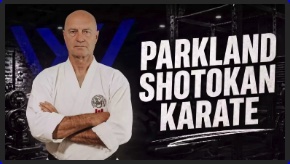



Talking to end users can be done on Zoom, like this collection of interview portraits for a gym management software company.
Anant who founded King Swing in Hawaii explains the business rationale for his virtual golfing offer.
Anant noticed two things that caught his attention. First, that golfing was picking up amongst “the younger crowd” and second that golf courses didn’t really fit into the calendar or diary of someone doing a regular job, except at weekends. That was the insight he needed for his new enterprise.
THE COPYCOURSE LTD
NOTICING DEPT.
79A TABLEY ROAD, N7
- - - - - - - - - - - - - - - -
- - - - - - - - - - - - - - - -
NOTHING WAS SENT ANYWHERE.
NOTHING WAS STORED.
THANK YOU FOR READING.
All of that took a few lines of code. It can tell us what you did. It has no idea why.
For that, someone has to sit down and ask.
What do your customers know that you don’t?
Next step: a one-hour call to work out who to talk to first.
+44 7802 859196 gideon@thecopycourse.com